
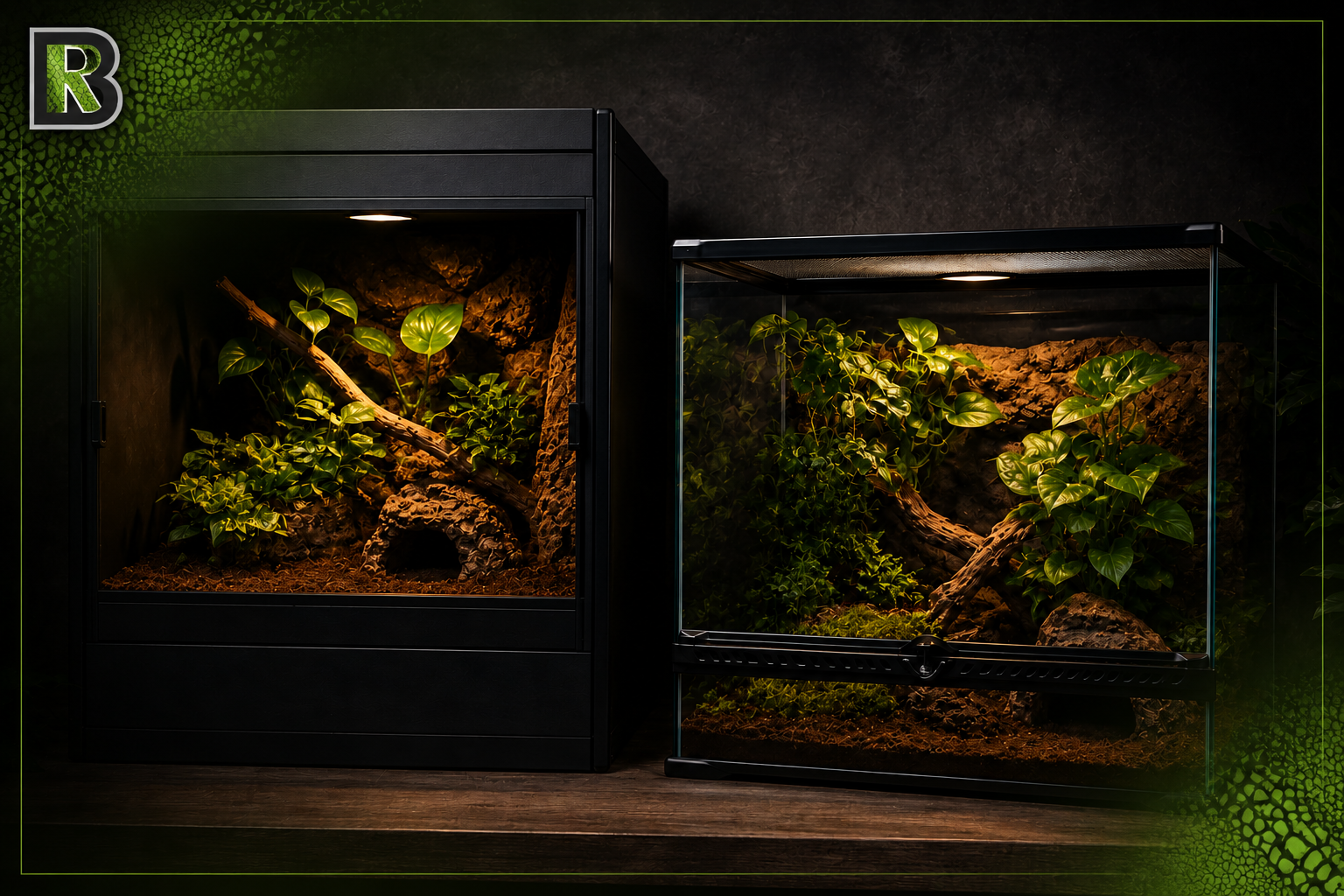
Choosing an enclosure is one of the biggest decisions you will make as a reptile keeper. It is your animal’s entire world — the space where it feeds, thermoregulates, hides, and lives out its daily routine. Get the enclosure right and everything else becomes easier. Get it wrong and no amount of good lighting or thermostats will fully compensate.
The two most common enclosure materials on the market today are PVC and glass. Both have their place. Both have their drawbacks. This guide breaks down the key differences so you can make an informed decision for your specific species and setup.
What Is a PVC Enclosure?
PVC enclosures are built from rigid polyvinyl chloride panels, typically with glass or acrylic sliding front doors. They are lightweight, durable, and excellent at retaining heat and humidity. The opaque sides reduce stress for many species that feel exposed in fully transparent enclosures.
PVC has become increasingly popular among serious reptile keepers and professional breeders over the last decade, largely because of how well it performs thermally compared to glass.
What Is a Glass Enclosure?
Glass terrariums are the traditional choice and remain widely used, particularly for display setups. They offer full visibility from all angles, which is appealing for keepers who want to observe their animals easily. However, glass conducts heat readily, meaning enclosures lose warmth quickly and require more energy to maintain target temperatures.
Heat Retention — PVC Wins Clearly
This is the single biggest practical difference between the two materials. PVC insulates. Glass does not.
In a glass enclosure, heat escapes through the walls constantly. Your heating element works harder, your electricity bill climbs, and maintaining a stable temperature gradient becomes genuinely difficult — especially in cooler South African winters or air-conditioned rooms.
A PVC enclosure holds heat the way a cooler box holds cold. Your thermostat has less work to do, your temperatures are more stable, and your heating costs drop noticeably over time.
For species with high temperature requirements — bearded dragons, monitors, uromastyx — this difference is significant.
Humidity Retention — PVC Wins Again
For tropical and humidity-dependent species, glass enclosures lose moisture rapidly through mesh tops and poorly sealed joins. Maintaining 70–80% humidity in a glass tank for a chameleon or green tree python requires constant misting and monitoring.
PVC enclosures, with their sealed panels and smaller ventilation areas, hold humidity far more effectively. For keepers running bioactive setups or keeping species with high humidity requirements, PVC makes the daily management of your enclosure considerably easier.
Visibility — Glass Wins
If watching your animal is your priority, glass offers a clear advantage. All-glass enclosures allow observation from every angle. For display setups or community spaces where aesthetics matter, a glass terrarium often looks cleaner and more impressive.
PVC enclosures typically have solid sides and a glass or acrylic front panel only. You see your animal from the front but not the sides or back. For most reptile keepers this is perfectly adequate — but for those who prioritise full visibility, glass remains the preferred option.
Stress Levels — PVC Often Better
Many reptile species — particularly snakes, nocturnal geckos, and skittish lizards — find fully transparent glass enclosures stressful. Being visible from all sides mimics the feeling of being exposed in the open, triggering defensive behaviour and chronic low-level stress.
The opaque sides of a PVC enclosure give animals a greater sense of security. Many keepers report improved feeding response, calmer behaviour, and better overall condition when switching from glass to PVC — particularly with ball pythons and other shy species.
Weight and Practicality
Glass is heavy. A large glass terrarium can be genuinely difficult to move, clean, or reposition. PVC enclosures are significantly lighter for the same internal volume, making them easier to handle, transport, and stack for breeders running multiple setups.
Which Should You Choose?
| Factor | PVC | Glass |
|---|---|---|
| Heat retention | Excellent | Poor |
| Humidity retention | Excellent | Poor to moderate |
| Visibility | Front only | All sides |
| Animal stress | Lower for many species | Higher for shy species |
| Weight | Light | Heavy |
| Best for | Most species, breeders | Display, tropical display |
Final Thoughts
For the majority of reptile keepers in South Africa — where energy costs are a real concern and temperature stability matters — PVC enclosures offer a practical, animal-focused solution that outperforms glass in almost every functional category.
Reptile Basics stocks a full range of PVC arboreal and terrestrial enclosures sized for everything from small geckos to large monitors. Browse our enclosure range and find the right home for your animal today.